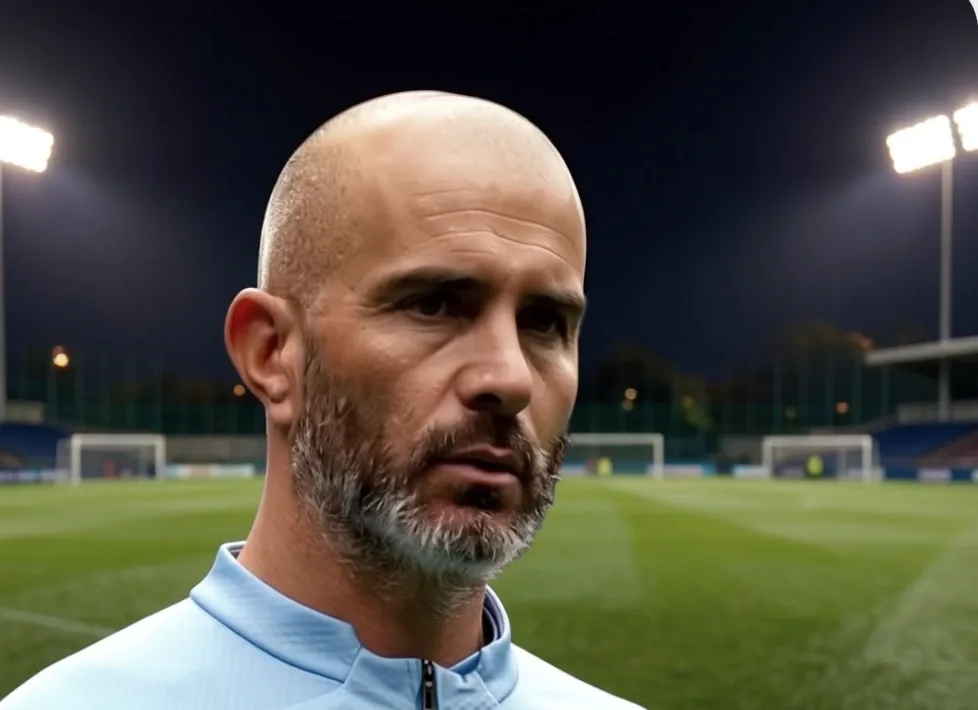
Enzo Maresca has taken the hits. The people above him have ducked every single one. That, in a sentence, is the state of Manchester City after a week that has asked serious questions of the men in charge.
Blame Flows Downhill at the Etihad
City's manager has fronted up while others have stayed quiet. Maresca has faced the cameras, absorbed the scrutiny and carried the weight of a club that suddenly looks uncertain of its own direction. Meanwhile, Khaldoon Al Mubarak has not broken his silence. Nor has Ferran Soriano. For a pair so comfortable speaking when trophies are being lifted, the silence has been deafening.
It is not the manager who should be answering the awkward questions. He did not design the structure. He did not set the strategy. He inherited a squad and a situation, and he has been left to explain it.
There is a growing sense that Maresca is owed an apology rather than another round of briefings against him. The alternative — allowing him to stand alone while the hierarchy watches from a distance — is the kind of behaviour that quietly corrodes a football club from the inside.
What the Silence Says
Al Mubarak and Soriano have built a reputation on control. They speak when it suits them, and they say exactly what they want to say. The problem with that approach is that it only works when things are going well. When they are not, the absence of a voice from above becomes a statement in itself.
Supporters are not stupid. They can see who is taking the heat and who is avoiding it. The manager has been left to absorb the criticism while the men who appointed him offer nothing. It is a familiar pattern at clubs where the executive floor is insulated from the weather on the pitch.
None of this is to pretend Maresca has been flawless. No manager is. But the imbalance in how responsibility is being shared — or not shared — is impossible to ignore.
A Club That Used to Speak as One
City have spent years presenting a united front. That front has cracked. The people at the top have gone quiet at precisely the moment their manager needed them to speak. It is not a good look, and it is not a coincidence.
What happens next matters more than any statement. If the hierarchy continues to leave Maresca exposed, the message to the dressing room and the stands is clear: when it goes wrong, the manager is on his own.
Maresca deserves better than that. He deserves an apology, and he deserves the people who hired him to stand beside him rather than behind him.