
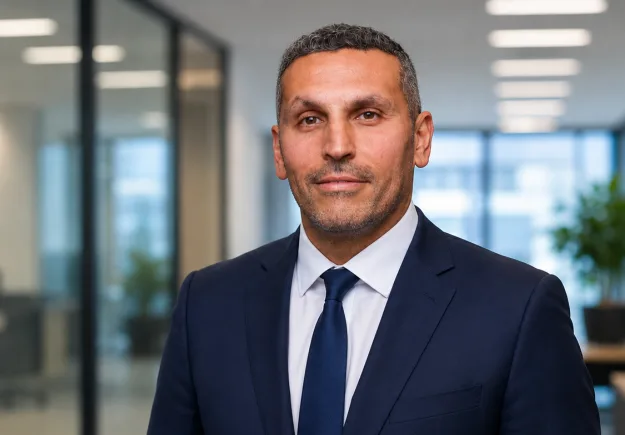
Khaldoon Al Mubarak has been one of the central figures in Manchester City's transformation from an ambitious but historically inconsistent English football club into a global sporting powerhouse. Since becoming chairman in 2008, he has overseen an era defined by sustained investment, elite management, major domestic success and the expansion of City Football Group into an international football organisation.
His career, however, is not defined by football alone. As a senior business executive and influential figure in Abu Dhabi, Al Mubarak operates at the intersection of international investment, government strategy and global sport. His leadership at City has brought extraordinary achievements, but the club's Premier League financial case has also placed his tenure under intense scrutiny.
1. From Abu Dhabi business leader to football chairman
Al Mubarak graduated from Tufts University in the United States with a degree in economics and finance. He began his professional career at the Abu Dhabi National Oil Company (ADNOC) before taking on senior responsibilities at the Tawazun Economic Council, formerly known as the UAE Offsets Group. These roles helped establish his experience in strategic investment, business development and international commercial relations.
His subsequent career at Mubadala, Abu Dhabi's state-owned investment company, became a defining part of his professional life. As managing director and group chief executive, he has overseen a broad international investment portfolio spanning multiple industries and markets.
His responsibilities extend into education, advanced technology, energy and international diplomacy. He has also held prominent positions in Abu Dhabi's government and business institutions, giving him a network and range of experience well beyond the football industry.
2. The transformation of Manchester City
When Sheikh Mansour bin Zayed Al Nahyan's Abu Dhabi-backed investment group acquired Manchester City in 2008, Al Mubarak became chairman and a key figure responsible for overseeing the club's long-term development.
The ambition was not simply to assemble a team capable of winning a trophy. It was to build a sustainable presence among the world's leading football institutions, with the infrastructure, recruitment, coaching and commercial reach to compete at the highest level year after year.
Under Al Mubarak's chairmanship, City developed a modern training complex, strengthened its global commercial operation and recruited a succession of high-profile managers, including Roberto Mancini, Manuel Pellegrini and Pep Guardiola.
The sporting results have been exceptional. City won its first Premier League title of the new era in 2012. In 2023, they won the Champions League and completed a historic treble. In the 2023–24 season, it became the first club to win four consecutive English top-flight titles. City also won the UEFA Super Cup and FIFA Club World Cup in 2023.
A defining feature of Al Mubarak's approach has been continuity. Rather than treating each managerial appointment as an isolated project, the club invested in structures intended to support long-term success. The Guardiola era, in particular, brought a distinctive playing identity and helped establish City as a benchmark for possession-based, tactically sophisticated football.
Al Mubarak has presented Guardiola's influence as extending beyond silverware to the wider development of English football. His role in maintaining the relationship between manager, ownership and club hierarchy has been an important part of City's modern story.
3. Building a global football organisation
In 2013, Al Mubarak became chairman of City Football Group (CFG), the organisation established to develop a network of clubs and football-related businesses around the world.
The model extended City's influence beyond Manchester, with clubs including New York City FC and Melbourne City FC becoming part of a wider international structure. The intention was to share expertise in coaching, recruitment, sports science and commercial development while creating opportunities across different football markets.
This reflects a business-led approach to football: developing interconnected organisations rather than relying on the fortunes of a single first team. It has helped establish City Football Group as a significant force in the international sports industry.
4. Leadership, diplomacy and recognition
Al Mubarak's influence extends into Abu Dhabi's wider economic and diplomatic relationships. His responsibilities have included senior government advisory roles, international investment leadership and involvement in educational and technological initiatives.
His public recognition includes:
- Commander of the Order of the British Empire (CBE), 2013.
- Freedom of the City of London, 2021, recognising his contribution to UK–UAE relations.
- France's Legion of Honour, 2022.
- The Abu Dhabi Award, 2025, recognising his service to Abu Dhabi and the UAE.
These honours reflect a career that encompasses international business, public service and institutional development, rather than football administration alone.
5. The Premier League's 115-charge case: a major challenge to his legacy
No career profile of Al Mubarak can now avoid the Premier League's long-running financial case against Manchester City. The allegations concern the period from 2009 to 2018, during which the league accused the club of providing inaccurate financial information, misrepresenting sponsorship arrangements, failing to disclose certain remuneration and breaching financial regulations. The club was also accused of failing to cooperate with the league's investigation.
The case reached a major turning point on 29 September 2026, when an independent commission published its findings.
The independent commission found City guilty of all charges relating to serious financial-rule breaches and upheld three of the four alleged breaches concerning cooperation with the investigation.
On 1 October 2026, City lodged an appeal, maintaining its innocence and arguing that the commission's opinion contains material errors of law, principle and fact.
The appeal process remains ongoing. The commission's sanctions are to be addressed separately, with possible consequences under the Premier League's rules including a fine, points deduction or other sporting penalties.
For Al Mubarak, the case represents a serious challenge to the reputation of the organisation he has led for almost two decades. His tenure is closely associated with the club's rise, making the questions surrounding its financial conduct inseparable from any assessment of his chairmanship.
A positive assessment of his career can fairly highlight the transformation of City's football operations, the scale of its sporting achievements and his role in building a global football business. But those achievements must now be considered alongside the independent commission's findings.
Al Mubarak and City maintain that the club is innocent and that the appeal will challenge the ruling. That position should be distinguished from the commission's findings, which remain a matter of formal record while the appeal proceeds. It would be premature to treat the appeal as either a vindication or a defeat before its outcome is known.
6. His lasting legacy
Khaldoon Al Mubarak's career at Manchester City illustrates both the possibilities and the risks of modern football leadership.
His contribution to the club's rise is substantial: City became a serial title winner, secured its first Champions League crown and developed an international network of football businesses. His wider career demonstrates the reach of Abu Dhabi's investment strategy and his standing in international business.
Yet leadership is measured not only by growth and trophies but also by governance, accountability and compliance with the rules under which an organisation operates. The independent commission's findings have therefore introduced a fundamental qualification to the story of his time at City.
Ultimately, Al Mubarak's legacy will rest on two connected questions: how the transformation he oversaw is remembered, and what the final outcome of the Premier League proceedings establishes about the club's conduct during that transformation.
For Manchester City supporters, his chairmanship remains central to the club's modern identity. For football more broadly, the case will be a defining test of how sporting success, financial regulation and executive accountability intersect at the highest level of the game.