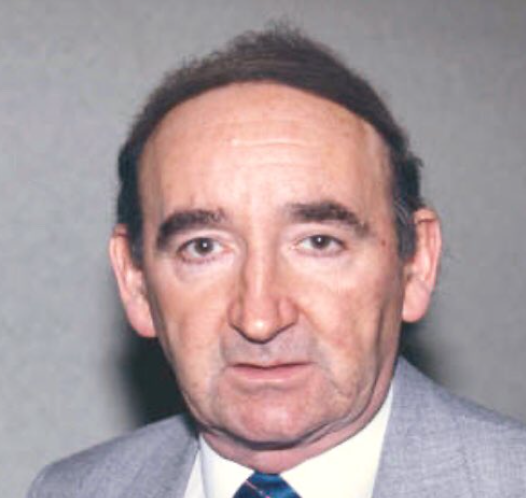
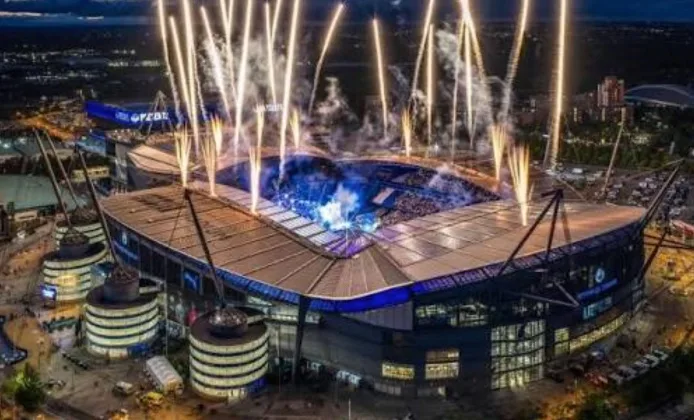
Maresca's first pre-season takes shape
Enzo Maresca's first Manchester City pre-season will not be judged by how sharp the training-ground photographs look or how warmly his return is received. It will be judged by how quickly the team develops a new working rhythm.
That makes City's opening friendly block more significant than a typical summer programme. The club's official fixture list has City facing Inter on 1 August before meeting Atletico Madrid on 9 August, giving Maresca two serious European reference points before the competitive noise begins.
Those games are not decorative. They are a tactical deadline.
Maresca has been appointed on a three-year deal through to 2029, with City publicly leaning into his knowledge of the club, his Elite Development Squad background and his role in the 2022/23 Treble staff. That continuity matters, but it also strips away some of the usual settling-in excuses.
City's official announcement framed the appointment as a natural return. Maresca said he knows the demands and expectations, and that he wants his side to win, play good football and enjoy the pressure of representing Manchester City.
That is a strong opening line. Inter and Atletico will quickly test whether it has substance.
Different questions, different answers
Pre-season friendlies often get treated as fitness exercises with a scoreboard attached. That reading is too soft for this City summer.
Inter and Atletico are useful opponents because they ask different questions. Inter should examine City's build-up security, central spacing and ability to play through pressure without becoming slow. Atletico should examine emotional control, counter-pressing discipline and the capacity to keep the game on City's terms when the rhythm becomes awkward.
That is exactly what Maresca needs. He does not require a sequence of comfortable fixtures that create false certainty. He needs opponents who expose the parts of the structure that are not yet automatic.
The first issue is rest defence. Guardiola's City were at their most suffocating when they could attack with numbers while still protecting the centre of the pitch. Maresca's version will need the same security, but he cannot simply borrow the old map and expect the same results.
The second issue is tempo. City have spent years mastering when to accelerate and when to hold opponents in place. A new manager can keep the same broad principles, but the triggers change. One pass played too early can turn control into transition. One extra touch can turn dominance into sterile possession.
Inter and Atletico will give Maresca a clean read on both problems. They will not decide the season, but they can reveal whether City are absorbing his detail quickly enough.
Familiarity as protection and pressure
The awkward truth for Maresca is that his familiarity with City is both protection and pressure.
It protects him because he already understands the language of the club. He knows why positional discipline matters, why spacing is non-negotiable and why City's best football is built on control rather than chaos.
It pressures him because nobody inside the club can pretend this is a cold start. Maresca has worked with the system, coached within the academy and lived the standards of the Treble season. He arrives with institutional knowledge, not a blank notebook.
Khaldoon Al Mubarak's official interview made that point clearly, describing Maresca as someone who knows the club and whose football is not too different from the football City already play. The chairman also stressed that Maresca has his own philosophy.
That last line is the key. City do not need an impersonation of Pep Guardiola. They need enough continuity to keep the floor high and enough evolution to stop the team becoming readable.
The Guardian's breakdown of Maresca's in-tray captured the scale of that task: he has to step out from Guardiola's shadow, convince the hierarchy and find extra attacking routes beyond Erling Haaland.
That cannot wait until late August. The first signs have to appear in the friendlies.
What Maresca should be looking for
There are three things Maresca should be looking for in the Inter and Atletico games.
The answers will shape selection. Friendlies are not only about minutes in legs. They are about who understands the manager's details quickly enough to be trusted when the stakes rise.
That matters especially because this is a disrupted summer. The World Cup has scattered preparation plans across different return dates, and City have already had to think carefully about workload, staggered holidays and the shape of the first training block.
The risk is that City reach the first competitive stretch looking talented but not quite connected. That is the danger every succession project faces. The names can be elite, the training can be sharp, and the public messaging can be calm, but the team still has to find its timing.
Inter and Atletico should help reveal whether that timing is forming.
A chance for those on the fringes
The friendlies are not only a test of Maresca's tactical structure. They are also an audition for the players orbiting the first XI.
City's academy and younger senior options should see this as a narrow opening. Maresca's history with the development setup means he will know the profiles better than most incoming managers would. That should make his decisions sharper, not safer.
If a young player can handle Inter's pressure or Atletico's duels, that tells Maresca more than a comfortable cameo against a soft opponent. It tells him whether the player can follow the detail when the game becomes uncomfortable.
This is where pre-season can become meaningful. A strong 30 minutes in the right tactical role can alter the squad conversation. A sloppy half can show the gap between potential and first-team trust.
City's recruitment will still dominate the summer headlines. That is unavoidable. But Maresca's first month should not be framed only around who arrives. It should also be framed around who already in the building can survive his demands.
That is particularly relevant in midfield and wide areas. City need reliable rotation, but they also need players who understand how to protect the team when attacks break down. The best pre-season performers will be the ones who look useful without the ball as well as polished on it.
The first checkpoints
Maresca's appointment has been wrapped in familiarity. He knows City, City know him, and the club believe the transition can be smoother because the football language will not change completely.
The Inter and Atletico fixtures will start testing that belief before the table matters.
If City look connected, compact and clear in those games, the narrative around Maresca's first summer will strengthen quickly. It will suggest the club were right to value internal knowledge and tactical continuity.
If they look loose, predictable or emotionally flat, the friendlies will not be dismissed quite so easily. They will become early evidence that following Guardiola is not a theoretical challenge but a weekly problem.
That is why the 1 August and 9 August dates matter. They are not just markers on a pre-season calendar. They are the first real checkpoints of the Maresca era.
City do not need to peak in those matches. They do need to look like a team already moving towards something precise.
That is the standard Maresca has inherited. It is also the standard he chose.